

Why do some QA teams consistently deliver reliable and high-quality software, while others toil to identify bugs and experience unstable releases?
The real difference often is related to how easily the team is able to use software testing metrics to make measurable decisions. Often, the testing process turns out to be a routine checklist activity - run the tests, publish the results, and move on. However, without useful test metrics, the QA teams simply keep guessing. The solution lies in the effective use of software testing metrics. The right metrics can take raw data and convert it into performance metrics that teams can leverage to prioritize, predict change, and continuously improve quality.
What Are Software Testing Metrics?
Software testing metrics (often called software test metrics) consist of selected quantitative measures that demonstrate quality, progress, and the effectiveness of your testing. Essentially, these metrics allow QA teams to quantify what matters. The metrics assess everything from how much of your application has been tested (coverage metrics) to how well defects are discovered and fixed (defect metrics in software testing).
Some familiar testing metrics used in software testing include:
- Test case execution rate: The number of executed test cases versus those planned,
- Defect density: The number of defects per 1,000 lines of code (or per feature),
- Test coverage: The code or requirements that are tested are expressed as a percentage.
- Test automation metrics: Metrics that measure whether automation is successful, stable, and the ROI.
- Defect Leakage / Escaped Defects – bugs that reach production
- Mean Time to Detect (MTTD) – speed of identifying and fixing defects
- Test Design Efficiency – quality of test cases written versus executed
- Cost per Defect / Cost per Test Case – financial efficiency
- Risk Coverage Metrics – coverage of high-risk areas in the application
By using these measures, QA teams have project visibility and can make informed, data-driven decisions that can improve overall quality.
Why Are Software Testing Metrics Important?
Currently, testing is continuous in Agile and DevOps, and so is the need for measurable feedback, which is exactly what software testing metrics provide. Let’s take a look at the benefits of software testing metrics.
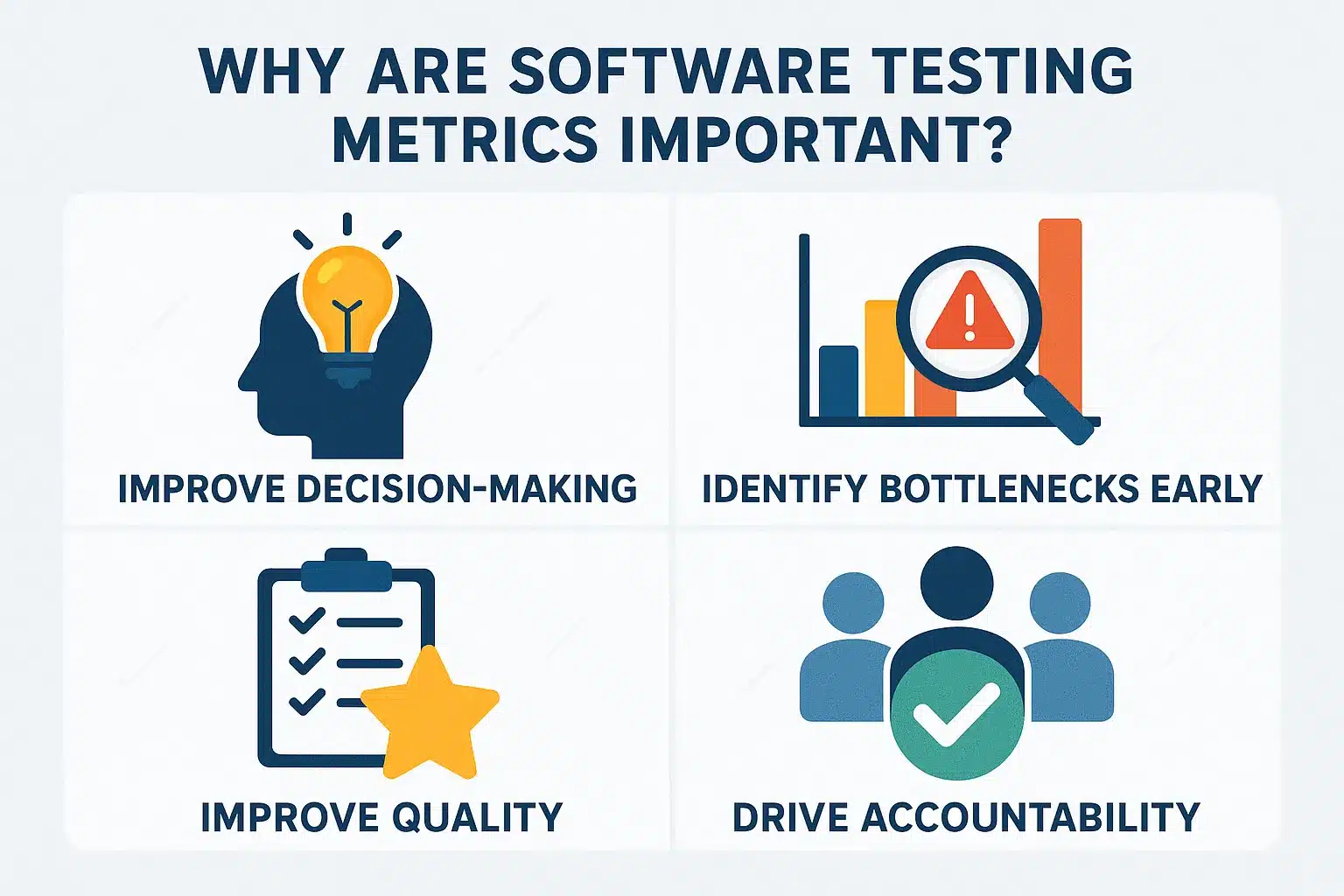
- Improve Decision-Making: The knowledge you derive from metrics can help you prioritize tests, plan releases, and allocate resources more effectively.
- Identify Bottlenecks Early: Metrics can point out inefficiencies in the testing cycle before they are considered in delivery timelines.
- Improve Quality: Quality metrics will provide insights into software testing and ensure performance, reliability, and functionality meet the user's expectations for a stable product.
- Drive Accountability: Teams can objectively measure productivity and identify areas for improvement.
KPIs: Pass/fail rates, automation ROI, test reliability scores
Best Practices: Align metrics to project goals, avoid vanity metrics, focus on actionable insights
 View Website
 View Website
 View Website
Overall, metrics will elevate QA from a reactive stance to being proactive; therefore, every test run will become an opportunity to learn and identify opportunities for improvement.
Types of Software Testing Metrics
It is important to know what metrics to use at each phase of testing. Here are some of the most common categories of software testing metrics:
1. Process Metrics: Measure how well the testing is going.
Examples: Test execution time, defect removal efficiency, test prep effort.
2. Product Metrics: Measure the quality of the software that is being tested.
Examples: Defect density, customer-reported bugs, code stability.
3. Project Metrics: Measure progress on the project and use of testing resources.
Examples: Test creation rate, test effort variance, defect turnaround time.
4. Automation Metrics: Measure the success of automated test frameworks.
Examples: Automated test coverage, flaky test rate, test reusability.
These categories help build the framework for test management metrics in modern QA.
Key Questions Answered by Testing Metrics
Good testing metrics should answer important questions such as:
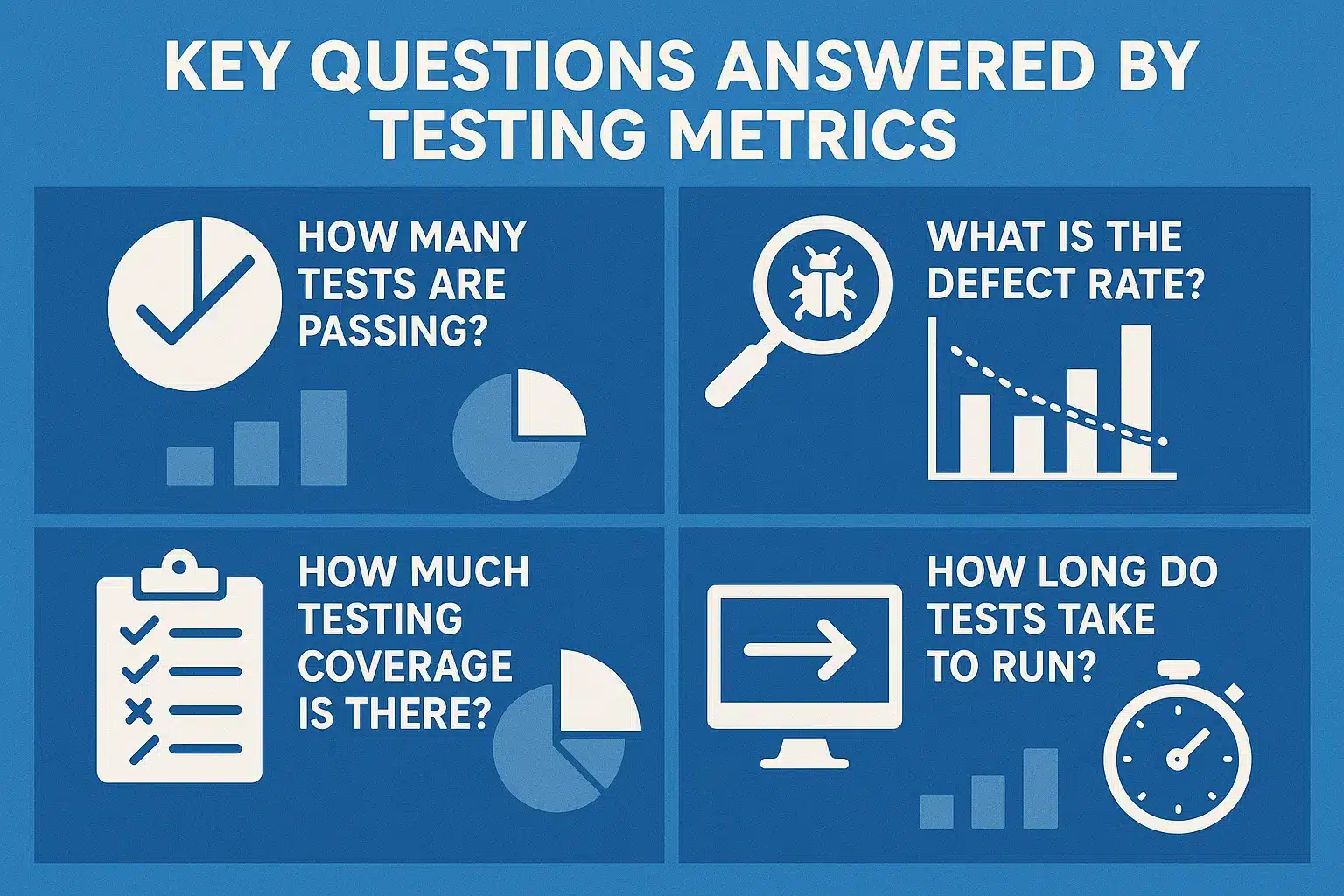
- Are we testing what we should be testing?
- How dependable are our testing efforts?
- How quickly can we find and fix defects?
- Are we saving time with our automation efforts?
- What is our release readiness score?
When you frame your metrics to these questions, you start to change your metrics from data to tell a story about quality that both engineering and management can understand.
Software Test Metrics Life Cycle
The metrics life cycle of a test usually involves the following steps:
- Identify Objectives: Specify what you want to achieve - improve test coverage, reduce flakiness, etc.
- Select Metrics: Select relevant quality assurance metrics in software testing that support your objectives.
- Collect Data: Use tools, logs, and automation scripts to pull together the data for your metrics.
- Analyze Results: Analyze the results and make sense of the numbers as best as you can.
- Report Findings: Share results that can be acted upon in an appropriate way with stakeholders.
- Refine Metrics: Build on what you are achieving over time by improving the process based on what you have learned and evolving your objectives.
Having a well-executed metrics life cycle will mean testing will be transparent, measurable, and focused on improvement.
Formula for Test Metrics
- Defect Density = (Total Defects Found / Size of the Module) × 100
- Test Case Execution Rate = (Executed Test Cases / Total Test Cases) × 100
- Test Coverage = (Number of Requirements Tested / Total Requirements) × 100
- Defect Removal Efficiency = (Defects Found During Testing / Total Defects Found) × 100
These formulas provide the analytical foundation for software performance testing metrics and give you quantitative QA progress.
How to Choose the Right QA Metrics?
The selection of relevant metrics is determined by your project objectives and the level of your maturity. Here is how to do this:
- Start with objectives. Define what success will look like: speed, quality, or stability.
- Do not choose vanity metrics (ones you cannot act on).
- Try to select a balance of manual and automated metrics, as you will find value in both.
- Make sure your metrics are aligned with your project goals. You should be able to measure if the project is on track for delivery and if the customer is satisfied.
For example, if your project goal is faster releases, metrics could focus on: test execution time, percentage of automation coverage, and flaky test rate.
How Modern Test Automation Tools Simplify QA Metrics Tracking?
Manually following QA metrics can be cumbersome and inaccurate. With current test automation tools, you can make it easier to collect, analyze, and visualize important software test metrics automatically. Modern test automation tools like Keploy take it another step by generating test cases and datasets automatically from real API calls.

- Measure test coverage and test reliability. All of these can be measured with minimal effort during the testing process.
- Identify flaky or redundant tests automatically, thus ensuring issues are caught sooner as part of the testing process.
- Gather test automation metrics from real-world activity in production, and know that the information is accurate.
- Improve test quality by employing data-backed insights and actionable information, and testing defects discovered during the testing process.
Real-World Examples of Software Testing Metrics in Use
Let’s examine the manner in which various organizations utilize software testing metrics to improve their QA decision-making abilities.
- Example 1: Fintech – Measuring Defect Metrics to Support Faster Software Releases
- Example 2: E-commerce – Metrics to Support the Balance of Manual and Automated Testing
- Example 3: SaaS – Utilizing Automation Metrics to Support Test Coverage Measurement
Manual vs Automated Test Metrics
Although traditional manual tracking provides a personal, hands-on outlook on the test results, it can often be slow and imprecise in real time. Automated tracking supports continuous insights to support faster decisions and provide more predictable quality outcomes.
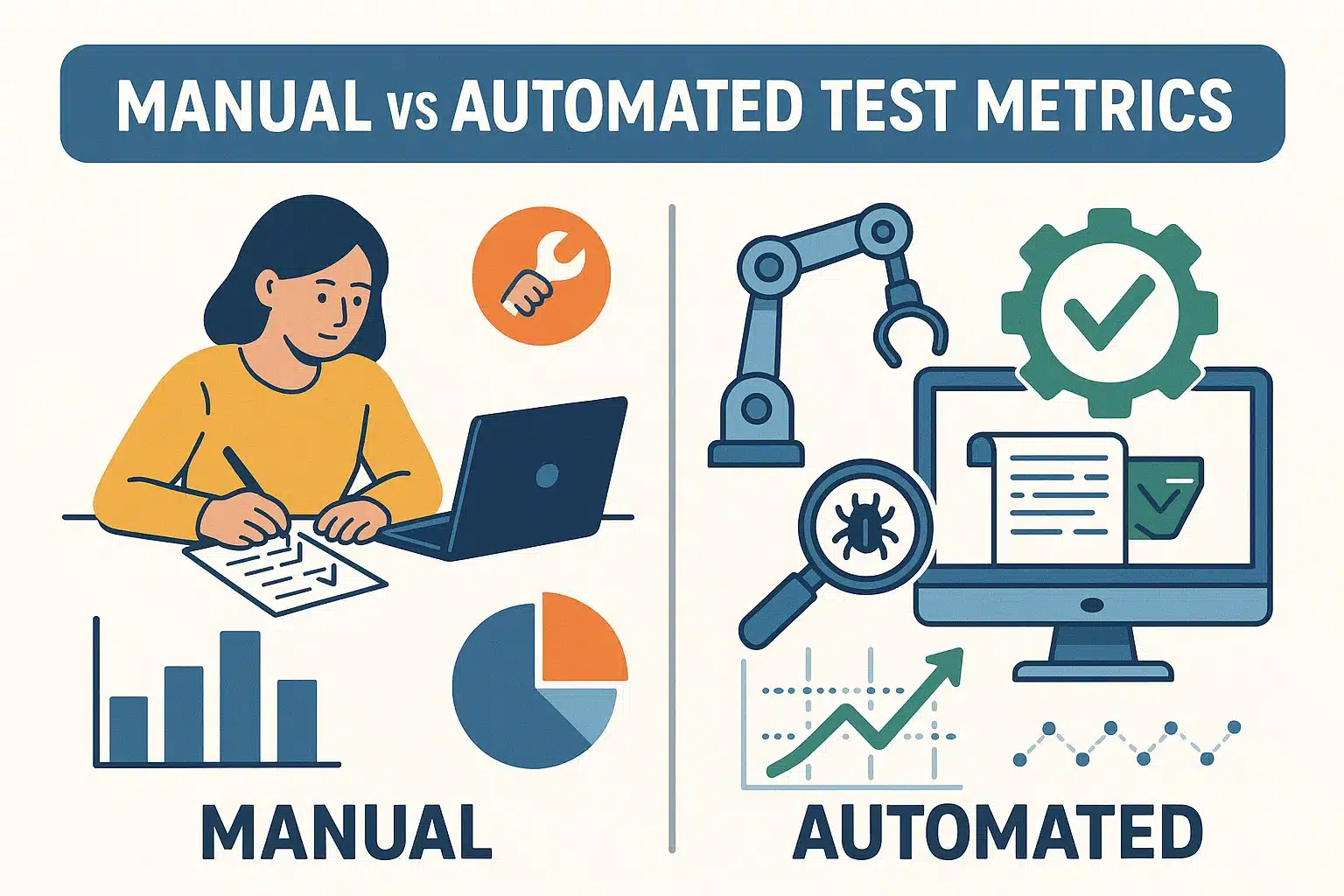
Here’s how the two approaches compare:
Aspect: Data Collection
Manual Metrics: Time-consuming, error-prone
Automated Metrics: Fast and consistent
Aspect: Accuracy
Manual Metrics: Depends on the tester’s discipline
Automated Metrics: Tool-based precision
Aspect: Insight Frequency
Manual Metrics: Periodic
Automated Metrics: Continuous
Aspect: Scalability
Manual Metrics: Limited
Automated Metrics: Highly scalable
Aspect: Example
Manual Metrics: Defects logged manually
Automated Metrics: Automated coverage tracking
Benefits of Software Testing Metrics
- More visibility and control over QA
- More timely detection and resolution of defects
- Data-led decision making
- Less test flakiness and duplication
- A better alignment with business objectives
- Greater confidence in software quality
Drawbacks of Software Testing Metrics
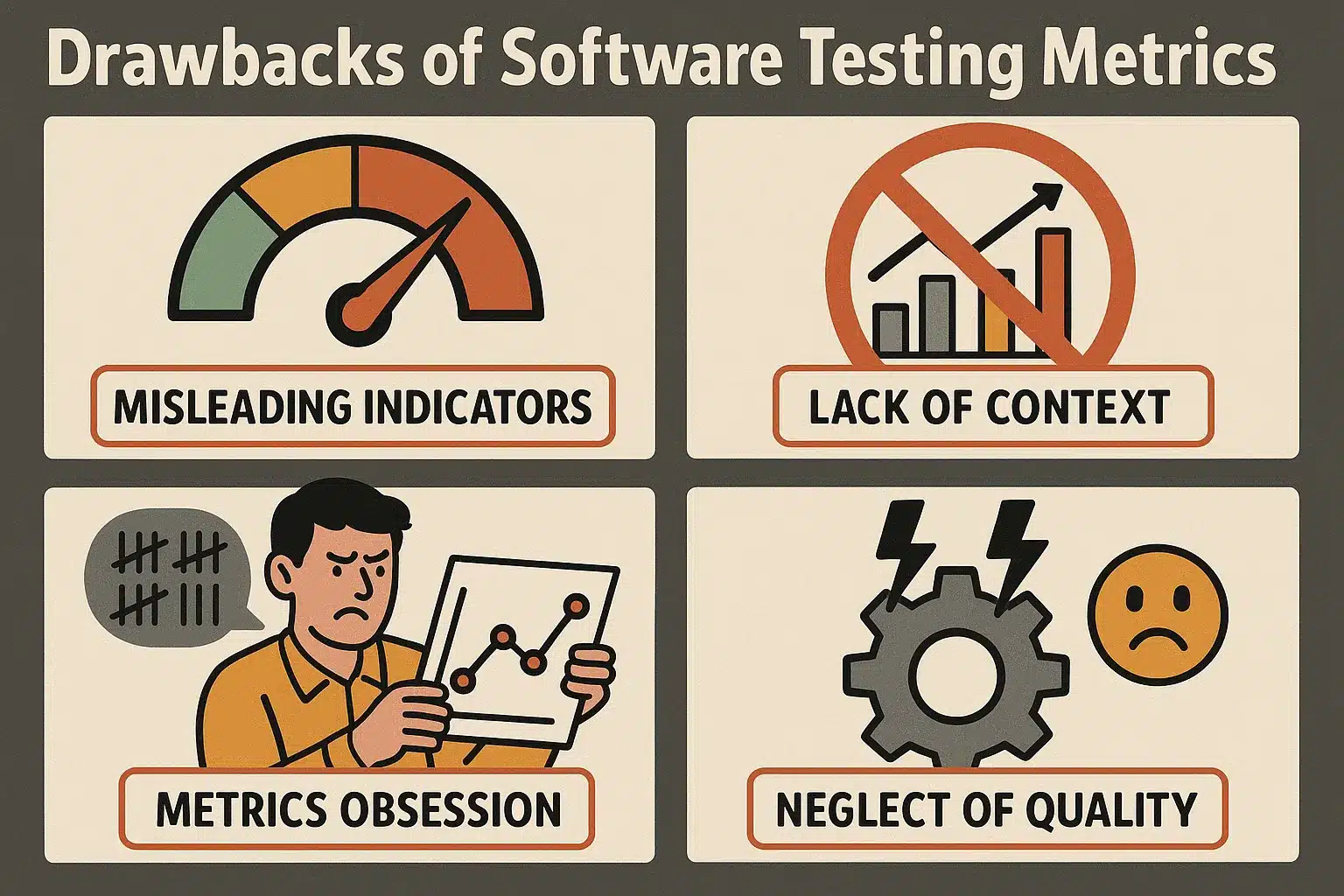
- It can be misleading if measured in isolation
- Can tend toward number-centric as opposed to quality-centric thinking
- If gathering data and analyzing it consistently is needed, you must factor that into your planning
- If you do not utilize it with tools that automate it, you may add overhead
Conclusion
Software testing metrics do more than represent echoes of performance; they are, in fact, the language of quality. Wherever QA measures can tell them what's working and what's not, and where they need to improve. When applied in automation and in conjunction with real-world data, like the data being surfaced with Keploy, metrics go from a report of what's happening to a continuous feedback loop of data points that inform smarter testing strategies. As you refine your QA process, remember: metrics do not just measure an outcome, they influence it. The question should never be if you track metrics, but rather how smart you'll be using them to guide every single QA decision that follows.
Frequently Asked Questions (FAQs)
1. What are the upcoming trends impacting software testing metrics?
Software testing metrics are evolving from descriptive to predictive with the rise of AI-powered testing, predictive analytics, and autonomous QA tools.
2. When and how should teams evaluate, assess, and improve their software testing metrics?
QA teams should frequently determine what tests or solutions tie back to release goals and remove metrics that don’t provide decision value.
3. What is the major fault that teams make when it comes to testing metrics?
One of the most common mistakes is to focus on quantity vs. quality.
Comments (0)