
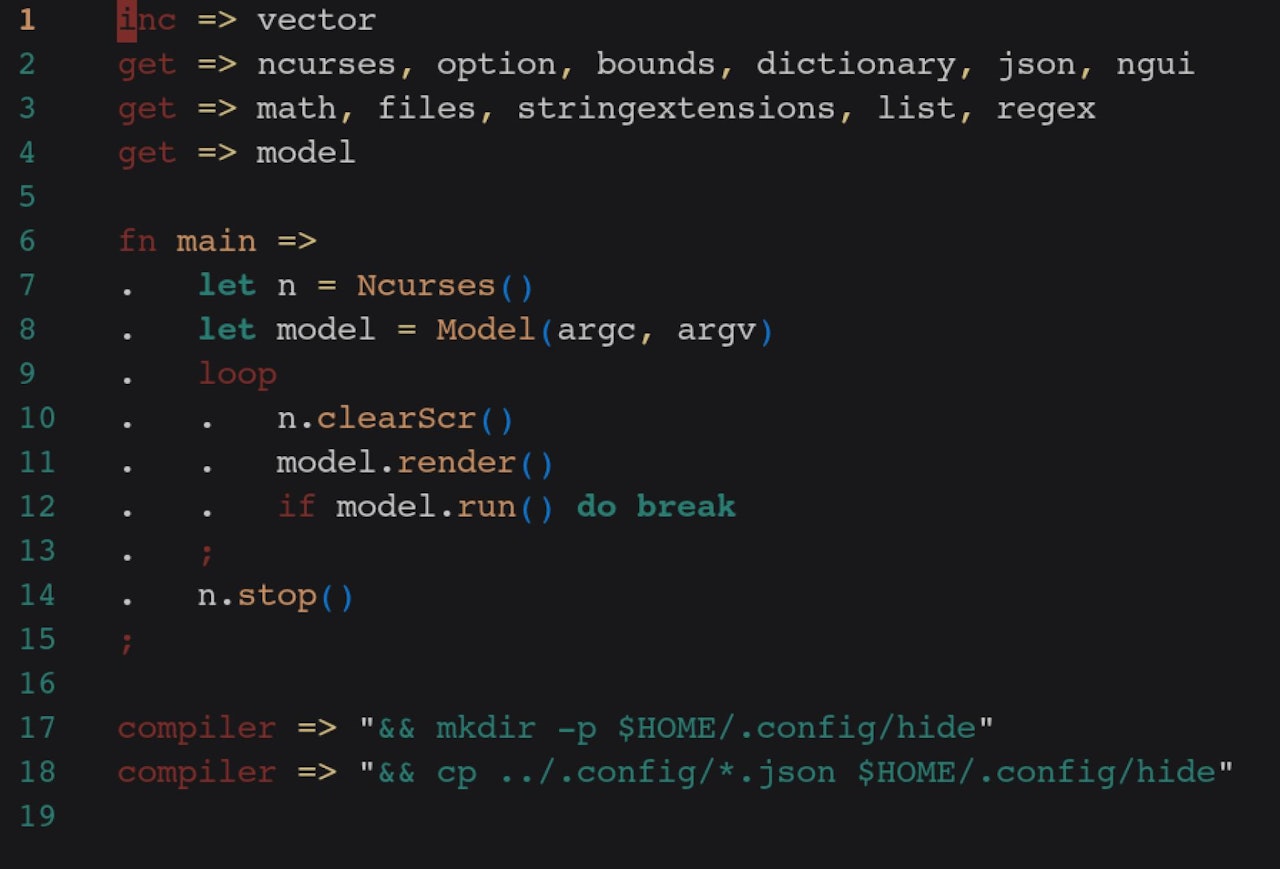
While working with a lot of string comparisons it gets tedious to write elif <variable> == "Some String". So since rust has this really nice way of doing this, using match statements. I figured it would be best to implement something similar to it.
Designing the match statement and what it can be used for
match <expression>
    <expression> => do <expression> //inline way
    <expression> => //multi line way
         <expression>
         <expression>
    ;
    _ => do <expression> //default statement
;
//Assign based on match
//The last expression in each statement is the value output
let <variable_id> = match <expression>
    <expression> => do <expression> //inline way
    <expression> => //multi line way
         <expression>
         <expression>
    ;
    _ => do <expression> //default statement
;
//Assign without creating
<variable_id> = match <expression>
    <expression> => do <expression> //inline way
    <expression> => //multi line way
         <expression>
         <expression>
    ;
    _ => do <expression> //default statement
;
So when using this you can now do things like this. It's obviously more useful and readable when there's more matches
let word = "Hello"
let paired_word = match word
    "Hello" => do word + " World"
    _ => do "Unable to find pair"
;
println(paired_word)

let i = 5
let text = match i
    > 5 => do "More than 5"
    < 5 => do "Less than 5"
    1 => do "1"
    _ => do "Unkown"
;
println(text)

class SomeClass
pub
    Object active_something = Object()
    Object enabled_something = Object()
    int index = 0
    fn is_active => bool doremi true
    fn is_enabled => bool doremi true
;

let class_obj = SomeClass()
let output = match class_obj
    .is_alive() => do Some(class_obj.active_something())
    .is_enabled() => do Some(class_obj.enabled_something())
    .index < 0 => do None<Object>()
    _ =>
        println("Unhandled case")
        None<Object>()
    ;
;
Comments (0)