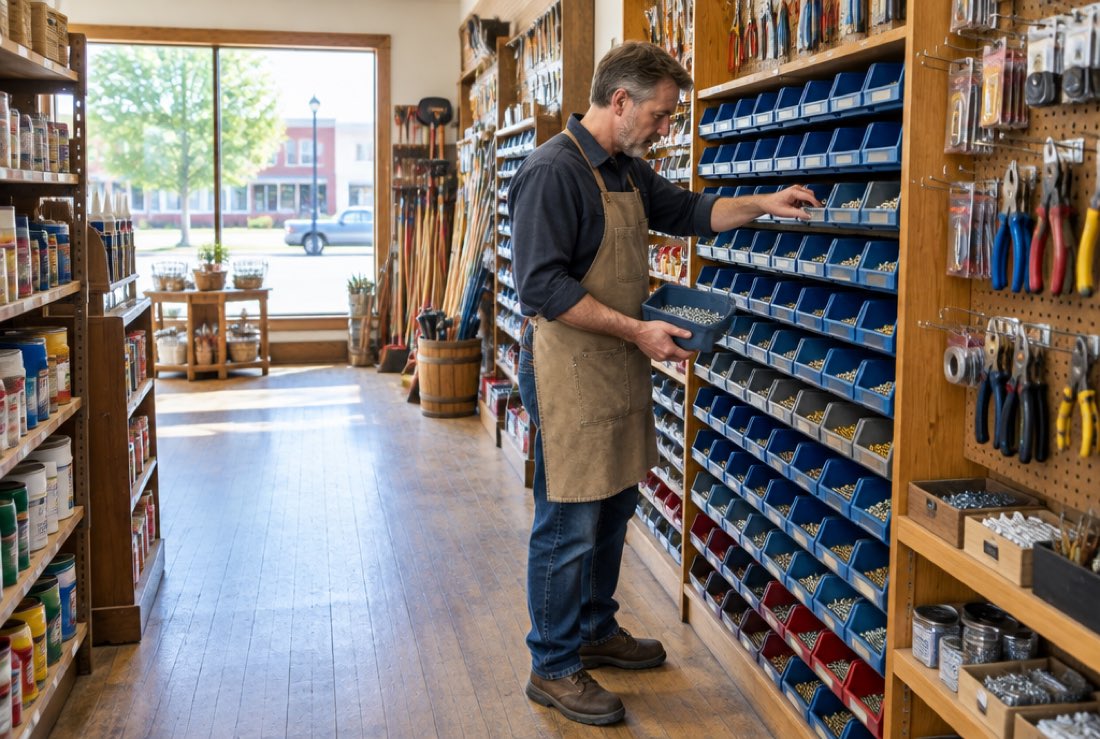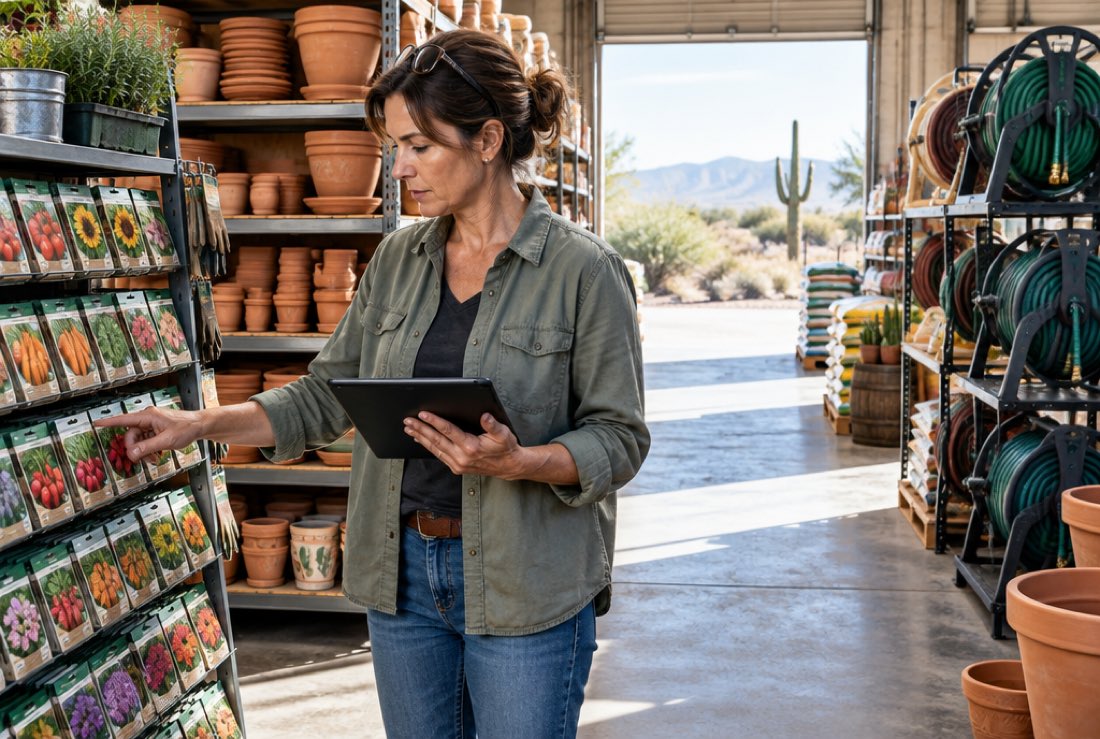
Delgado Hardware has been on the same corner in Tucson since 1978, and until two summers ago it was ordered the way Rosa's father ordered it: a walk down each aisle on Sunday night, a spiral notebook, and three phone calls on Monday morning.
It worked until it didn't. Tucson's building season starts in January and the store carries 8,412 items, about six hundred of which move fast enough to matter in any given month. Rosa could hold maybe eighty of those in her head.
What broke first
It was never the big things. Lumber and paint were fine, because a contractor calls ahead for those. It was the peg hooks — irrigation fittings in April, swamp cooler pads in May, hose menders all summer — that emptied out without anybody noticing until a customer asked.
"A contractor comes in for eight fittings and we have three," Rosa said. "He buys the three, drives to the big box for five, and next time he just starts there."
The first month
Aisle imported the item file out of her register on a Tuesday and had a proposed minimum on every bin by Thursday. Rosa disagreed with about two hundred of them, which is the part she says mattered most.
- She raised the minimums on anything a contractor buys by the box.
- She dropped them on the slow specialty items she had been over-ordering for years.
- She left the seasonal ones alone and let Aisle learn them.
The first automatic purchase order went to Redbud Garden Wholesale five days after she signed up. She approved it by hand. By March she had turned on auto-send for three of her four suppliers, with a $400 cap above which Aisle still asks.
Two summers later
The number Rosa watches is not the one on the invoice. It is how often somebody asks for something she should have had. In the twelve months before Aisle, her top 200 items ran out ninety-one times. Last year it was nine.
The notebook is still under the register. I have not opened it since the first spring.
The money moved too, though more quietly: about $12,400 of cash that had been parked in stock nobody was asking for went back into the fast-moving half of the store.
I used to know what was low by walking the store. Now I know before I walk, and I walk to help somebody instead.