Selling Sep 22, 2026 7 min read
Why the middle option wins
One price is a yes-or-no question. Three options turn it into a choice, and most homeowners choose the one in the middle. How to build the three so they do.

Cal Brennecke
Co-founder and CEO

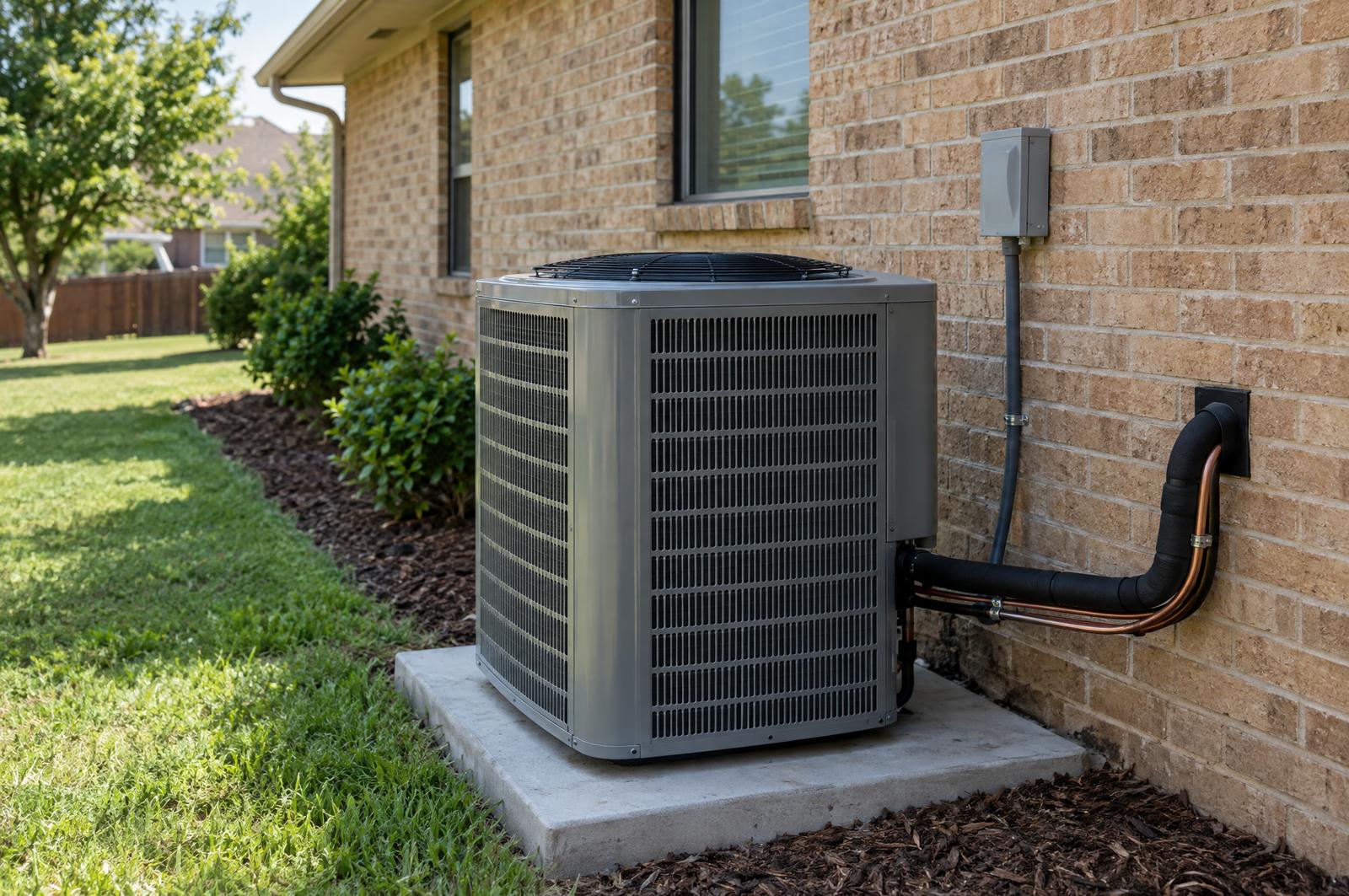
Every replacement call ends at a kitchen table, and every kitchen table has the same moment in it. The tech has walked the house, measured the return, looked at the twenty-two-year-old condenser out back, and now has to say a number out loud. For most of the history of this trade, it was one number.
One number is a yes-or-no question. The homeowner can say yes, or they can say “we’ll think about it,” which means no. There is nothing in between, and nothing to compare it to except a gut feeling that it sounds like a lot.
Three numbers change the question
Put three options on the table and the question is no longer “do I trust this number.” It becomes “which of these is right for us.” That is a much easier question to answer, and it is one the homeowner gets to answer themselves.
Across the 1,180 shops sending proposals on Quotient, 63 percent of homeowners who sign choose Better or Best. Not because anyone pushed them. Because the middle option, sitting between a bare-bones system and a premium one, looks like the reasonable choice. It usually is.
People do not want the cheapest thing or the most expensive thing. They want to feel like they made a careful decision.
How to build the three
The mistake we see most often is three options that are really one option in three costumes: the same system with a different thermostat. Homeowners see through that in about four seconds. The three should be genuinely different answers to the same problem.
- Good replaces what failed with something that works and meets code. A single-stage AC or heat pump, a standard warranty, nothing extra.
- Better is the system you would put in your own house. Usually a two-stage or higher-efficiency heat pump, a smart thermostat, a longer labor warranty.
- Best is the no-compromise version: variable speed, the highest efficiency that makes sense for the climate, air cleaning, the longest warranty you offer.
Write Better first. It is the one you are actually recommending, so build it the way you would quote it if it were the only option. Then step down for Good and up for Best. Quotient does this from your price book when you pick the system for Better, but the logic is the same on paper.
Price them like you mean it
The gap between options matters more than the options themselves. If Good is $6,400 and Best is $14,000, Better at $8,900 looks modest. If Better is $12,500, it looks like an upsell. As a rough rule, shops on Quotient that close well keep Better within 35 to 45 percent of Good, and Best within 30 to 40 percent of Better.
Margins should climb with the tiers too. A Good option at your floor and a Best option at your best margin is how the average ticket goes up without anyone feeling sold to.
Say less at the table
The hardest part for techs used to one number is staying quiet. Hand over the phone, walk through what is different between the three in two sentences each, mention that each one has a monthly number, and then stop. Let them talk to each other. Answer what they ask.
Marcus Lockwood at Cimarron Air in Tulsa told us his techs stopped dreading the close the week they started showing three options. “Nobody had to sell anything,” he said. “They explain, the homeowner picks, and everyone is in a better mood.”
That is the whole method. Three honest options, priced with a clear gap, presented without a pitch. The middle one does the rest.