Walking away from the screen
The hardest problems in our work have never been solved at the desk. In defense of the long walk as a legitimate part of the process.

Jake Simpson
Founder
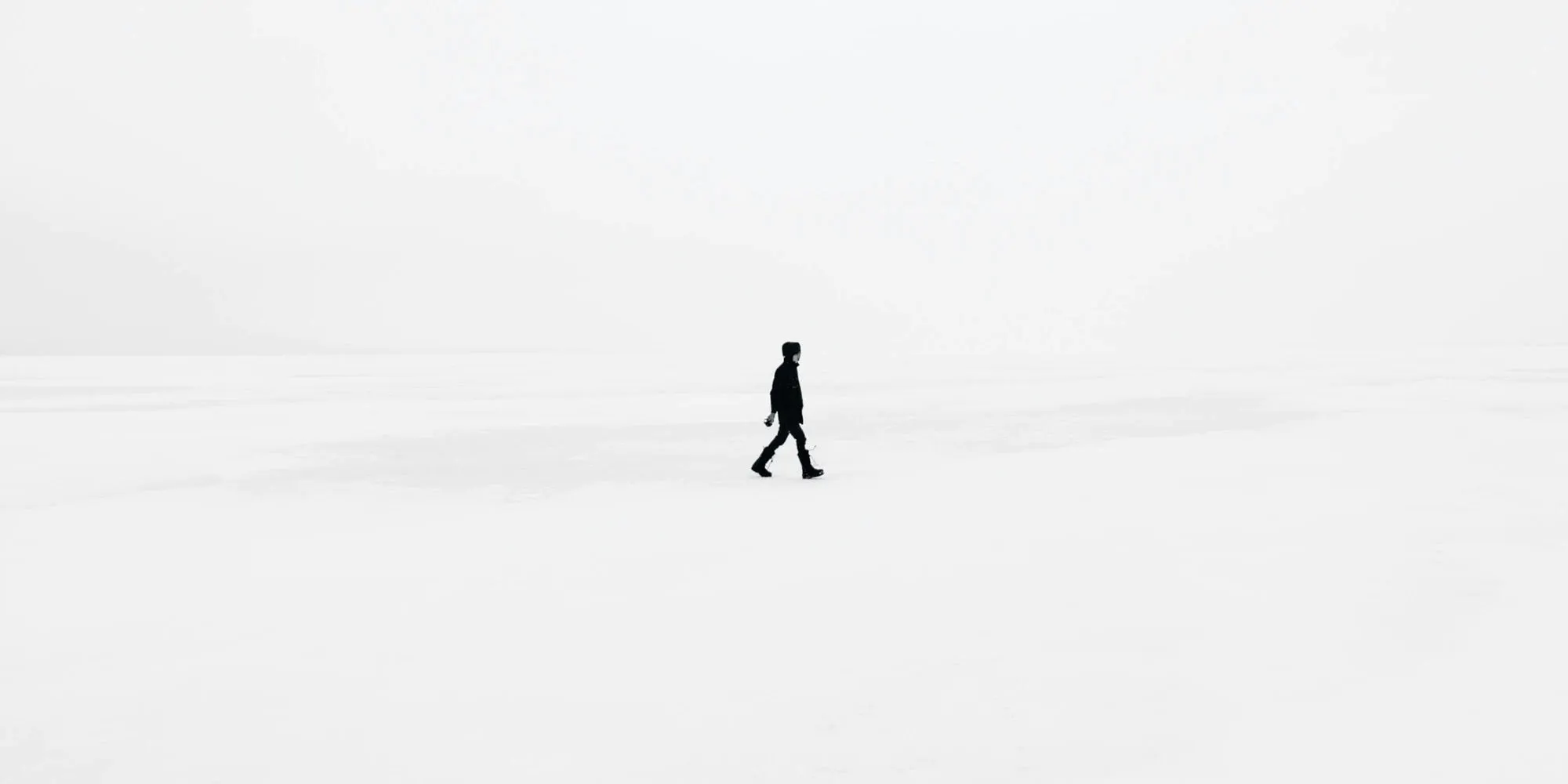
The architecture that finally untangled our sync engine arrived on a Tuesday, forty minutes from the office, somewhere past the second bridge. I had spent three days at the desk producing increasingly elaborate versions of the wrong answer. The right one took one walk. This keeps happening, to everyone here, and we have decided to stop treating it as a coincidence.
The desk is for output
Screens are extraordinary at execution and quietly terrible at judgment. At the desk there is always a next action available — another search, another tab, another small refactor — and the availability of next actions is precisely the problem. Motion substitutes for thought. You can spend a whole afternoon in vigorous, honest-feeling activity without once asking whether the direction is right.
A walk removes the next action. There is nothing to click between you and the second bridge. What is left is the problem itself, held loosely, turned over at three kilometers an hour — and the strange reliability with which it comes apart under that treatment suggests the desk was never where thinking happened. The desk is where thinking is transcribed.
Making it legitimate
The hard part is not the walking; it is the permission. A studio that tracks presence will always get presence — bodies at desks, generating plausible output. So we made the walk official, with rules, because rules are how a culture says it is serious:
- Stuck for more than an hour? The next move is your coat, not another search. An hour of stuck at the desk costs more than an hour of walking.
- No phone, or phone on silent in the bag. A walk with a feed in it is a scroll with scenery.
- One sentence when you return. Not a memo — a sentence, written down, before the tabs reopen. The walk's yield evaporates fast in front of a screen.
We hired minds and then measured chairs. The walk is what correcting that mistake looks like.
Slower is a speed
None of this is romantic anti-technology posturing — we build software all day and love it. It is arithmetic. Three days at the desk produced zero good architectures; forty minutes of snow produced one. The walk was not a break from the work. It was the fastest tool we had, and the only reason it looked slow is that nothing was being typed.
So this essay is permission, if you need it, in writing: the long walk counts. Take the problem, leave the screen, and let the second bridge do what the third tab could not.
Thanks for reading — slowly, we hope.
More stories